Text us at (469) 557-2256

NON-SURGICAL SPINAL DECOMPRESSION IN CHANDLER, AZ
Invest in Yourself. Move Better. Feel Better. Live Fully. THRIVE!
A CONSERVATIVE APPROACH TO NECK PAIN, BACK PAIN & DISC-RELATED CONDITIONS
Living with chronic neck pain, lower back pain, sciatica, or a herniated disc can affect nearly every aspect of your daily life.
Activities such as sitting, standing, walking, exercising, working, and even sleeping can become uncomfortable.
At CLiCK Chiropractic, we offer advanced non-surgical spinal decompression using two specialized systems: the DRX9000/DRX9000C and DOC Spinal Decompression Table.
Both systems are designed to deliver controlled, motorized traction to the cervical (neck) and lumbar (lower back) spine.
Our goal is to help appropriately selected patients manage spinal discomfort, improve mobility, and explore conservative treatment options without injections or surgery.
WHAT IS NON-SURGICAL SPINAL DECOMPRESSION?
Non-surgical spinal decompression is a specialized form of motorized spinal traction that gently stretches the spine using controlled, intermittent pulling forces.
Understanding Your Intervertebral Discs
Your spine consists of individual bones called vertebrae. Between most vertebrae are intervertebral discs that function as cushions and shock absorbers while allowing flexibility and movement.
Each disc consists of two primary structures:
Annulus Fibrosus: The tough outer ring of connective tissue that helps contain and support the disc.
Nucleus Pulposus: The softer, gel-like center that helps distribute pressure and absorb mechanical forces.
Over time, discs may become dehydrated, degenerate, bulge, or herniate.
When disc material or surrounding spinal structures irritate or compress a nearby nerve root, patients may experience pain, numbness, tingling, or weakness.
HOW DOES SPINAL DECOMPRESSION WORK?
During treatment, a specialized motorized table applies carefully controlled traction forces to the spine.
These forces alternate between periods of gentle distraction and reduced tension. The intended therapeutic effects include:
Reducing Mechanical Loading
Traction temporarily reduces certain compressive forces acting on spinal structures.
Creating Controlled Spinal Distraction
Gentle stretching may temporarily alter pressure within the intervertebral discs and surrounding structures.
Reducing Certain Types of Nerve-Related Discomfort
In appropriately selected patients, traction may help alleviate symptoms associated with mechanical irritation of spinal structures.
Stretching Surrounding Soft Tissues
Controlled traction stretches muscles, ligaments, and other supporting tissues.
Supporting Improved Mobility and Function
By potentially reducing discomfort and improving tolerance for movement, decompression may support rehabilitation and everyday activities.
What Happens Inside the Disc?
One proposed mechanism of spinal decompression involves temporarily lowering pressure within an intervertebral disc during traction.
This has led to the theory that decompression may encourage movement of disc material away from irritated nerve structures and facilitate fluid exchange within the disc.
However, research has not conclusively demonstrated that non-surgical decompression consistently retracts herniated discs, permanently restores disc height, or regenerates damaged discs.
The primary clinical objective is to determine whether controlled traction can help improve a patient's symptoms and function.
WHAT CONDITIONS MAY BENEFIT FROM SPINAL DECOMPRESSION?
Patients frequently explore non-surgical spinal decompression for conditions such as:
Bulging & Herniated Discs
A bulging disc extends beyond its normal boundaries, while a herniated disc involves displacement of disc material through a weakened portion of its outer structure.
These changes can sometimes irritate nearby nerves and contribute to neck pain, back pain, or radiating symptoms.
Selected patients with disc-related discomfort may be evaluated for decompression as part of a conservative treatment plan.
Degenerative Disc Disease
Degenerative disc disease involves structural changes affecting the intervertebral discs, including dehydration, loss of disc height, and altered spinal mechanics.
Decompression does not reverse disc degeneration, but controlled traction may be considered for symptom management in certain patients.
Sciatica & Lumbar Radiculopathy
Sciatica commonly refers to pain radiating from the lower back or buttock into the leg. Symptoms may include: Sharp, shooting, or burning pain, tingling or pins-and-needles sensations, numbness or discomfort extending into the thigh, calf, or foot.
Some patients experience these symptoms because of irritation or compression of lumbar spinal nerve roots. A clinical evaluation is necessary to determine the cause and whether traction is appropriate.
Cervical Radiculopathy & Neck Pain
Cervical disc-related conditions can sometimes irritate nerves traveling from the neck into the shoulder, arm, or hand.
Symptoms may include neck pain, radiating arm discomfort, numbness, or tingling.
Cervical traction may be considered as part of a multimodal conservative treatment program for certain patients.
Chronic or Recurring Spinal Discomfort
Patients with recurring neck or lower back discomfort may also seek evaluation for decompression. Not all chronic spinal pain originates from the discs, however, and decompression is not appropriate for every diagnosis.
TWO ADVANCED SPINAL DECOMPRESSION SYSTEMS AT CLiCK
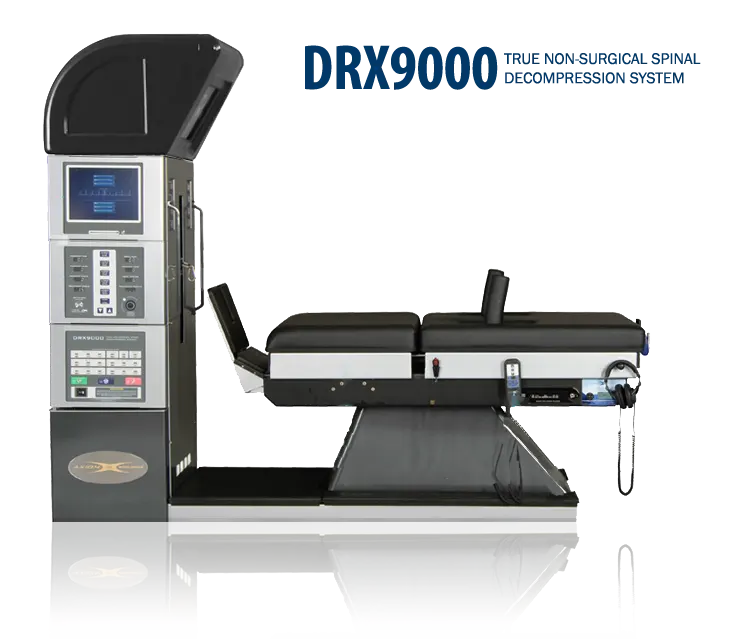
DRX9000 / DRX9000C Spinal Decompression System
The DRX9000 is a computer-controlled spinal decompression system that delivers programmable cycles of traction and partial release.
Our system includes the DRX9000C cervical component, allowing treatment of both the lumbar and cervical spine.
The technology regulates traction forces and treatment parameters according to the selected clinical protocol.
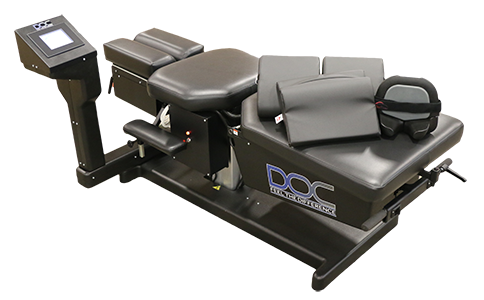
DOC Spinal Decompression Table
Our DOC Spinal Decompression Table provides a second system capable of delivering controlled cervical and lumbar traction.
The DOC system incorporates adjustable patient positioning and programmable traction settings.
Having two systems allows us to offer additional treatment options, greater scheduling flexibility, and individualized care.
Two Advanced Systems. Cervical & Lumbar Treatment Capabilities. Personalized Conservative Care.
WHAT HAPPENS DURING A SPINAL DECOMPRESSION SESSION?
Step 1: Initial Consultation & Evaluation
Before recommending decompression, Dr. Mario Armani reviews your medical history, symptoms, previous treatments, and relevant diagnostic imaging.
Your evaluation may include:
Medical history and symptom review, orthopedic and neurological examination, range-of-motion and functional assessments, review of relevant X-rays or MRI findings, screening for contraindications, discussion of treatment options, expectations, and risks.
Imaging is not automatically required for every patient. Additional testing or referral may be recommended when clinically indicated.
Step 2: Positioning on the Decompression Table
For lumbar decompression, patients generally remain clothed and are positioned on the treatment table using specialized pelvic and torso supports or harnesses.
For cervical decompression, the head and neck are positioned in a specialized support system designed for controlled cervical traction.
Your clinician adjusts the equipment to help maintain proper positioning and comfort.
Step 3: Controlled Decompression Cycles
Once treatment parameters have been selected, the system begins applying programmed traction forces.
The traction typically alternates between a higher-force distraction phase and a reduced-force or partial-release phase.
Patients may experience a gentle pulling or stretching sensation.
Treatment can be adjusted or discontinued if discomfort develops.
Step 4: Treatment Duration
A spinal decompression session commonly lasts approximately 20–30 minutes, depending on the equipment, prescribed protocol, and patient tolerance.
Treatment duration is individualized.
Step 5: Post-Treatment Care
Following decompression, your clinician may recommend additional conservative therapies when appropriate, including:
Ice or other symptom-management measures
Electrical muscle stimulation
Intersegmental traction
HydroMassage
Therapeutic stretching or exercises
Chiropractic treatment
Class IV laser therapy
Therapeutic massage
These services are not automatically included in the decompression session and may involve additional charges.
SPINAL DECOMPRESSION TREATMENT PROTOCOLS
How Many Treatments Will I Need?
The number and frequency of decompression sessions depend on your diagnosis, symptom severity, duration of the condition, functional limitations, and response to care.
Some traditional DRX9000 treatment programs have used relatively intensive schedules over approximately six weeks.
An example of a historically promoted DRX9000 protocol includes:
Five sessions per week for the first two weeks. During weeks three and four, the frequency decreases to three sessions per week. For the final two weeks, treatment continues at two sessions per week, for a total of 20 sessions over six weeks.
Some manufacturer-associated protocols have also described periodic maintenance visits following an initial course of care.
Important: This is an example of a traditional equipment-associated protocol, not an established requirement or a schedule proven necessary for every patient.
Our Individualized Approach
At CLiCK Chiropractic, we don't believe every patient should automatically receive the same number of treatments.
Your recommended treatment plan will be based on:
-Your specific diagnosis and clinical presentation
-Relevant examination and imaging findings
-The severity and duration of symptoms
-Your response to initial treatment
-Measurable changes in pain and function
-Your individual recovery goals
Your progress will be periodically reassessed to determine whether continuing, modifying, or discontinuing treatment is appropriate.
Treatment is not continued solely to complete a predetermined number of visits.
HOW SHOULD I PREPARE FOR MY APPOINTMENT?
Medical History
Be prepared to discuss your symptoms, previous injuries, surgeries, medical conditions, medications, and prior treatments.
Diagnostic Imaging
If you have relevant MRI or X-ray reports, please bring them or arrange to have them available for review.
Comfortable Clothing
Wear comfortable clothing that allows appropriate positioning of the treatment harnesses. Pants or shorts are generally preferable to dresses or skirts.
Medications & Meals
There are generally no special dietary restrictions for routine spinal traction, but follow any individualized instructions provided by your clinician.
Do not discontinue prescribed medications unless instructed by the prescribing healthcare professional.
IS SPINAL DECOMPRESSION SAFE?
Non-surgical spinal decompression is a non-invasive procedure that does not require incisions or anesthesia. However, it is not appropriate for every patient.
Possible adverse effects include temporary soreness, muscle spasms, increased pain, or aggravation of existing symptoms.
Contraindications or precautions may include:
-Certain spinal fractures or instability
-Severe osteoporosis
-Spinal tumors or infections
-Certain inflammatory or structural spinal disorders
-Some prior spinal surgeries or implanted hardware
-Other conditions in which traction could pose an unacceptable risk
Patients with progressive neurological weakness, new bowel or bladder dysfunction, or saddle-region numbness require urgent medical evaluation.
Your clinician will determine whether decompression is appropriate before beginning treatment.
CAN SPINAL DECOMPRESSION HELP ME AVOID SURGERY?
Many patients prefer to explore appropriate conservative options before considering more invasive procedures.
For certain conditions, non-surgical spinal decompression may be considered as part of a broader conservative treatment strategy.
However, research on motorized spinal decompression remains mixed, and it has not been established that DRX9000 or DOC treatment reliably prevents surgery.
Some patients may benefit from other conservative treatments, while others require medical or surgical evaluation.
Our goal is to help you understand your options and make informed decisions about your spinal health.
READY TO EXPLORE NON-SURGICAL SPINAL DECOMPRESSION?
If you're experiencing persistent neck pain, low back pain, sciatica, or disc-related discomfort, contact CLiCK Chiropractic to request an evaluation.
TESTIMONIALS
What Others Are Saying
"Relief for the first time"
"I've been with plenty of different Drs. & Physical Therapists over the past 6 years. I'm 27 and have been suffering with severe back problems. I felt relief for the first time in years!"
- Kathya Banuelos

"AMAZING"
"AMAZING, if I could I'd give 10 stars. I had issues with my upper back for years. I saw many chiropractors and wasted a lot of money with them."
- Donna Peterson
"They took the time"
"WOW!!! Rarely have I ever visited a clinic like this and had the practitioner be so thorough. They took the time to get to know me and any issues I was having. 10 out of a 10. Great atmosphere, and even better people."
- Hans Laughner
FAQS
What can I expect during my first visit?
Your first visit is all about getting to know you and your needs. We’ll start with a thorough consultation to understand your concerns, a comprehensive exam to assess your condition, and your first treatment. Our goal is to make you feel comfortable and create a tailored plan to help you move better and feel your best.
Do you take X-rays or perform imaging?
At CLiCK Chiropractic, we adhere to the latest evidence-based guidelines when considering imaging, such as X-rays, for our patients. Current research indicates that routine imaging is often unnecessary for most musculoskeletal conditions and may not enhance patient outcomes. Instead, we prioritize a comprehensive consultation and physical examination to assess your condition. Imaging is reserved for cases where it's clinically justified, such as instances of trauma, severe symptoms, or neurological concerns. In these cases—or when recommended by the doctor—an imaging prescription will be provided, which can be taken to SimonMed for same-day, walk-in X-rays. For more detailed information on these guidelines, you can refer to Clinical Compass.
Do you accept FSA or HSA?
We gladly accept payments through FSA (Flexible Spending Account) and HSA (Health Savings Account) to make care more accessible.
Do you accept insurance?
We don’t bill insurance directly, but we’re happy to provide you with a detailed superbill. You can submit this to your insurance company, and many of our clients receive partial reimbursement depending on their plan.

Get in Touch With Ease
We’re all about making communication simple and quick! Texting us at (469) 557-2256 is the fastest way to reach our team. While we don't have someone answering calls, our text-based approach ensures you get the attention you need without waiting on hold.
(469) 557-2256
Email: [email protected]
CLiCK Chiropractic

670 N 54th Ste 1, Chandler, AZ
85226
When We're Here For You:
Mon - Thurs
10:00 AM – 1:00 PM
3:00 PM – 6:00 PM
Friday
10:00 AM – 12:30 PM
3:30 PM – 6:00 PM
"After going to chiropractors all over the valley I can confidently say CLiCK is the absolute BEST."

